May 1, 2026
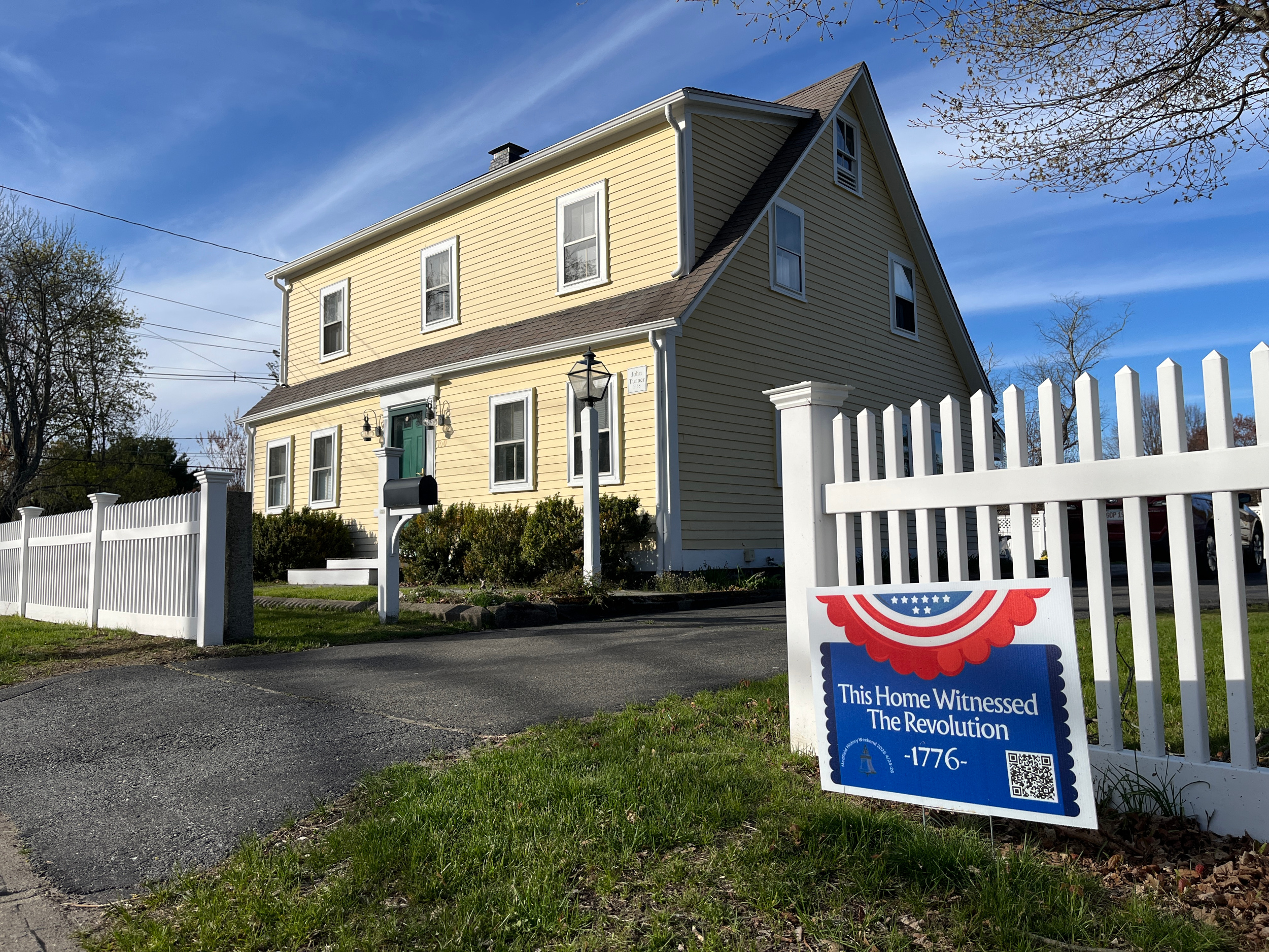
In Medfield we are fortunate to have over forty buildings still standing that witnessed the Revolutionary War 250 years ago. This collection reflects the dedication of generations of homeowners who lovingly care for and maintain them, and of townspeople who value and preserve our history. Because of that dedication, we can enjoy these Revolutionary War witness houses.
At the time of the American Revolution, Medfield was a small agricultural village. New England homes were simple: wood post-and-beam construction, often with a steep gable roof, a large center chimney, and clapboard siding. Most houses began small—often in a Cape Cod style—and were later enlarged with additions such as a second story or an ell off the back.
Medfield’s witness houses strongly reflect this building tradition. This year, in honor of America’s 250th anniversary, we are highlighting these homes.
On Medfield History Weekend, the Old Town Trolley tour passed many of these early homes, and narrator Joe Opiela shared a variety of historical facts about them. The Medfield Historical Society has reached out to residents seeking permission to place signs in front of these houses to identify them and recognize the owners for their stewardship. They will also be featured in future issues of the Portal.
Moses Hartshorn House
The Moses Hartshorn house is located on Pound Street. It is a traditional two-story center entry colonial. It was built by Samuel Boyce around 1741, shortly after Pound Street was laid out in 1735. The house sits on a granite foundation and is clapboarded. Its façade has five windows on the second floor and two windows flanking each side to the front door. Over the years the house has had several updates. In the 1850s, it was remodeled extensively in the popular Greek Revival style which is evident in the glass surround of the front door. While at one time, the house had two chimneys at both gable ends, a shed dormer was added to the back roof creating a third floor and an addition was added off the back enlarging the first-floor foot print.
Samuel Boyce was born 19 April 1720 in Mendon, son of William Boyce and Bethiah Hayward. His father died when he was 14, and a family friend, Ebenezer Read of Uxbridge, became his guardian. When he was 19, he and his siblings inherited his father’s estate. This is likely how Samuel was able to buy land in Medfield. He purchased a 40-rod lot from Joshua Boyden around 1741 and built a house and a smithy on the property. He married Esther Hastings in 1744, and they became the parents of three children. In September 1750, Samuel sold his property in Medfield to Moses Hartshorn, probably as he had become too sick to work. He died two years later, 24 Apr 1752 in Walpole.
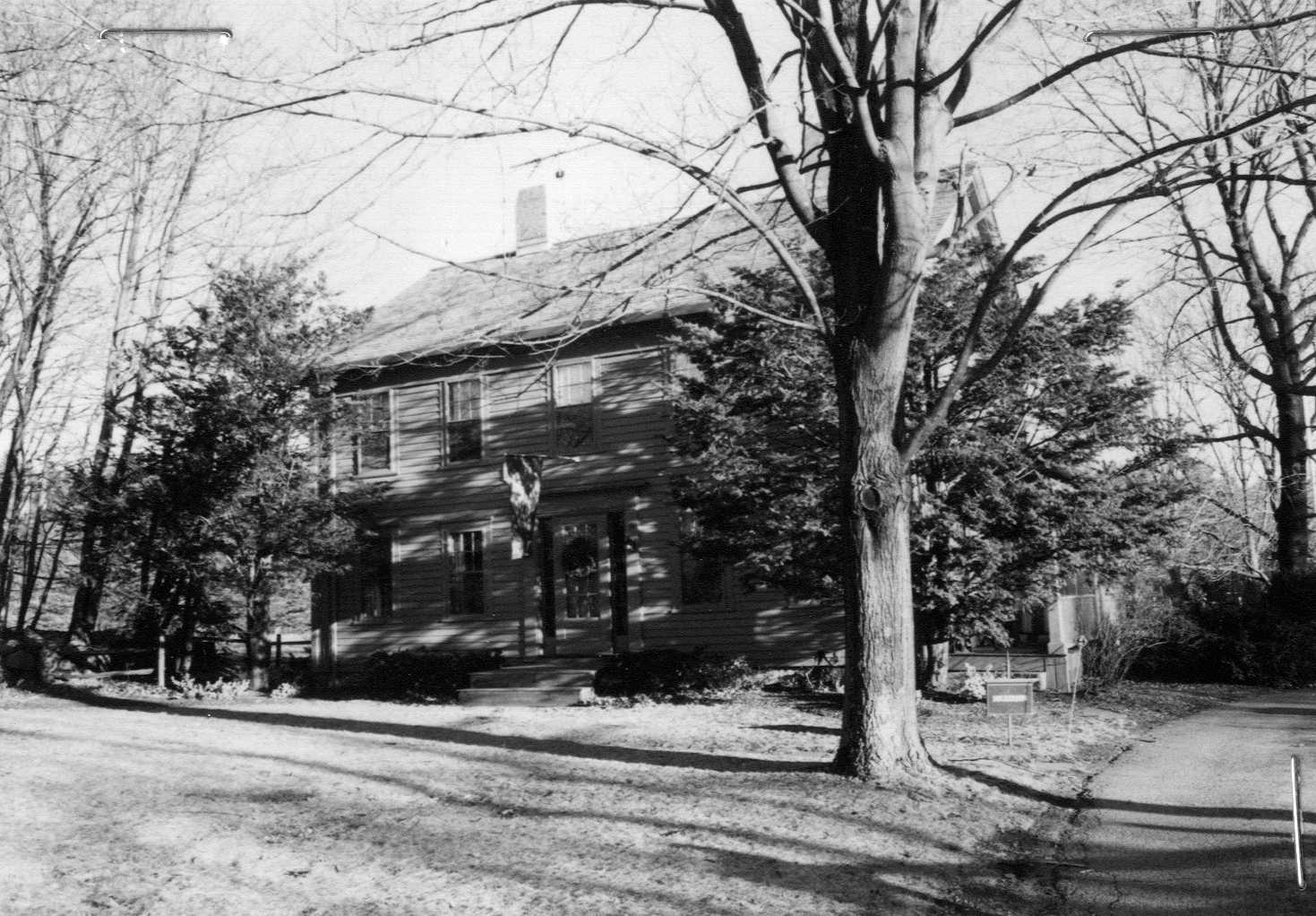
Moses Hartshorn was born 17 Mar 1728 in Dedham, the son of Ebenezer Hartshorn and Rebecca Hunting. It is likely he was apprenticed as a young teen to learn the profession of blacksmith. On 15 Sept 1750, Moses bought the 40-rod lot from Samuel Boyce that included the homestead and blacksmith shop. The home remained in the Hartshorn family for the next 140 years. In 1751, Moses married Elizabeth Smith (1730-1782) and together they became the parents of seven children. Moses took an interest in civic issues, serving as a selectman in 1763, 1767, 1769 and 1770.
One interesting fact regarding Moses Hartshorn was that he was a handful of Medfield enslavers. In 1763, he purchased of Uriah Morse of Medway, a 22-year-old enslaved man named Newport Green. Green became a nailor, (someone who makes nails) – a trade Green likely learned while enslaved by Hartshorn, as Morse was an innkeeper. Sometime before the Revolutionary War, neighbors of Hartshorn were concerned by Hartshorn’s treatment of Green, pooled their money and bought Green’s freedom and paid the town bond for the sale.
Moses died in 1772, and did not live to see the Revolutionary War, but his sons, Moses (Jr) (1759-1826) and Obed (1861-1843) were soldiers in the War. The Pound Street property passed to Moses (Jr), while son Obed settled in Dover. Moses (Jr)’s son Charles (1797-1878) was the next owner of the home followed by his son Moses (III) (1827-1891). Moses III was the father of one daughter, who likely was not interested in the old family homestead. Moses III sold the property in 1890 to Mary L. Bryant, in 1906 Bryant sold the property to Mary L. Faye, who in turn sold it to Melvin Blood in 1910, who was still living there in 1920. Today the home continues to be a residential home.