Apr 1, 2026
During the Society’s museum openings on the 1st and 3rd Saturday of each month, one never quite knows what the morning will bring. Some days it is quiet, while on other days there is a steady stream of visitors over the two-hour period.
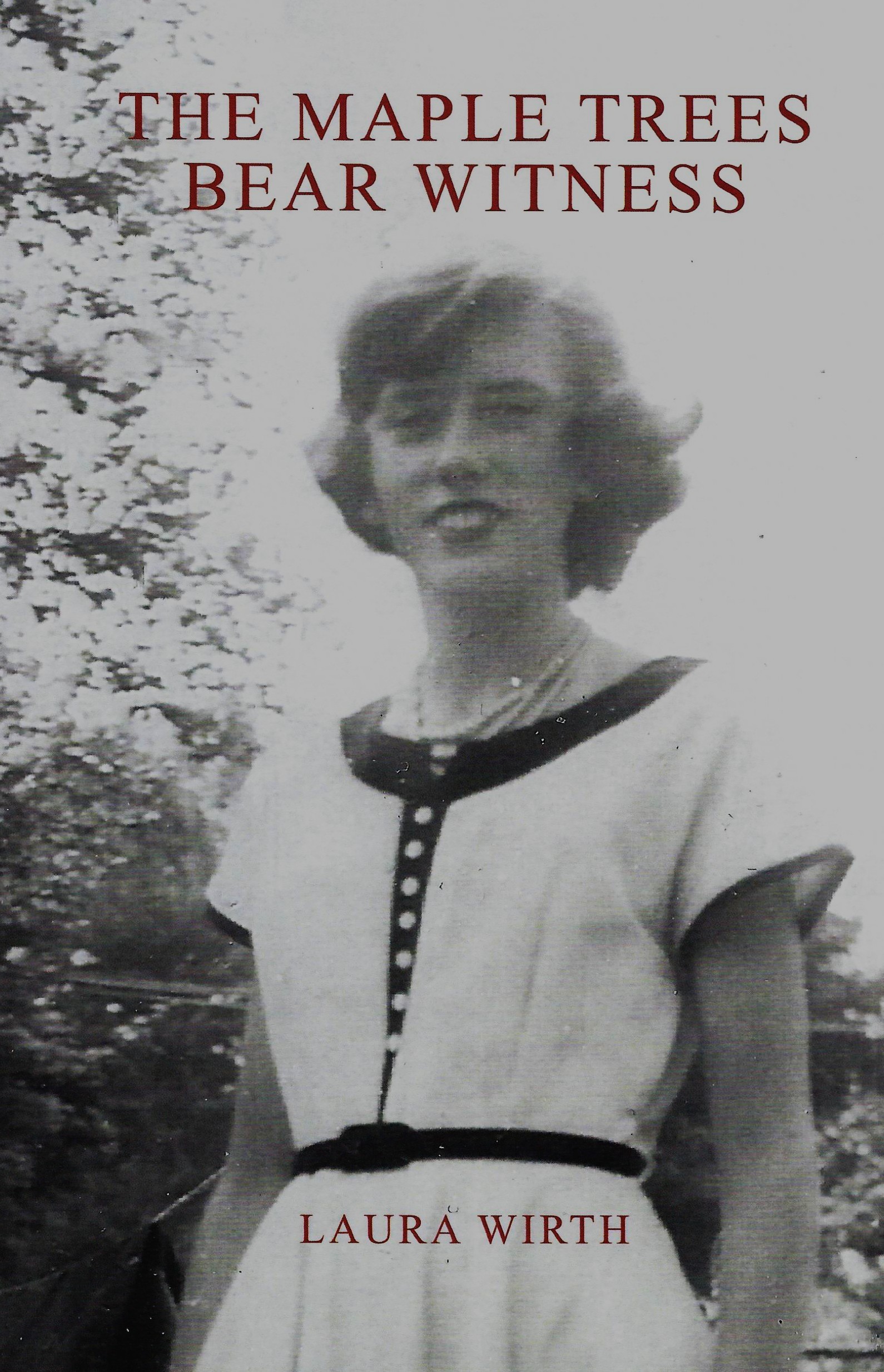
Nearing the end of the most recent opening, member Laura Wirth (MHS class of ’79) and her daughter, Hannah, stopped in to introduce themselves, and to see if their newly published book, The Maple Trees Bear Witness, had arrived as a gift to the Society. Indeed, it had.
This was not just any book – it was a heartfelt account of Laura’s experiences as a teen coping with her mother’s mental illness, including time spent institutionalized at Medfield State Hospital in the 1970s and into the 1990s.
“Interesting that Medfield State Hospital was called a hospital. I saw nothing that reminded me of a hospital. Pills appeared to be the only treatment. I never saw doctors on the ward in the Clark Building. I never witnessed group therapy sessions. I witnessed no visitors visiting the sick with flowers in hand,” Laura wrote in her book. “I saw patients being placed in a warehouse, not a cottage. I saw bars on all of the windows…patients with no voices, no opinions, with brains in desperate need of repair.”
What made Laura’s experiences especially challenging were the difficult economic conditions in which she grew up, and her age at the time her mother’s illness became especially acute.
Laura wrote how her parents divorced when she was young due to her father’s alcohol use, which then contributed to her mother’s mental breakdown and first experience with Medfield State Hospital. It was then Laura was placed in a foster home for two years until her mother could reclaim her in the midst of 5th grade. At that point, the family opted to settle in Medfield so her mother could attend weekly therapy sessions at the hospital and keep up with her medications. Despite lack of a car, dependency on food stamps, and living in a small apartment, Laura noted that being back together as mother and daughter filled her with joy.
For a period of about three years, Laura was able to put down roots in the Medfield community. “Walking on Main Street, everyone knew my name. Where people cared about us,” she wrote. Laura continued by noting that in Medfield she received a “top-notch education,” became connected to people who became lifelong friends, and where she ultimately met her husband.
Laura’s life began to unravel in high school as her mother’s mental health deteriorated, and she was forced into the role of caretaker. For years, Laura’s days were spent in a roller-coaster ride trying to navigate a complex mental health system, and learning how to be an advocate for her mother’s care. Laura also described dangerous conditions in the Clark Building at Medfield State Hospital where her mother was admitted. She noted access in and out was extremely guarded, and patients could attack at any moment (and one did during a visit). Yet, as Laura described, Medfield High School provided a refuge from the pain.
In the summer of 1995, when Laura’s mother was in her 50s, she moved into a nursing home, which provided supervision and kept her medications on schedule. But at age 58, Laura’s mom died unexpectedly from a heart attack. Laura was seven months pregnant with her first child.
A Historical Perspective
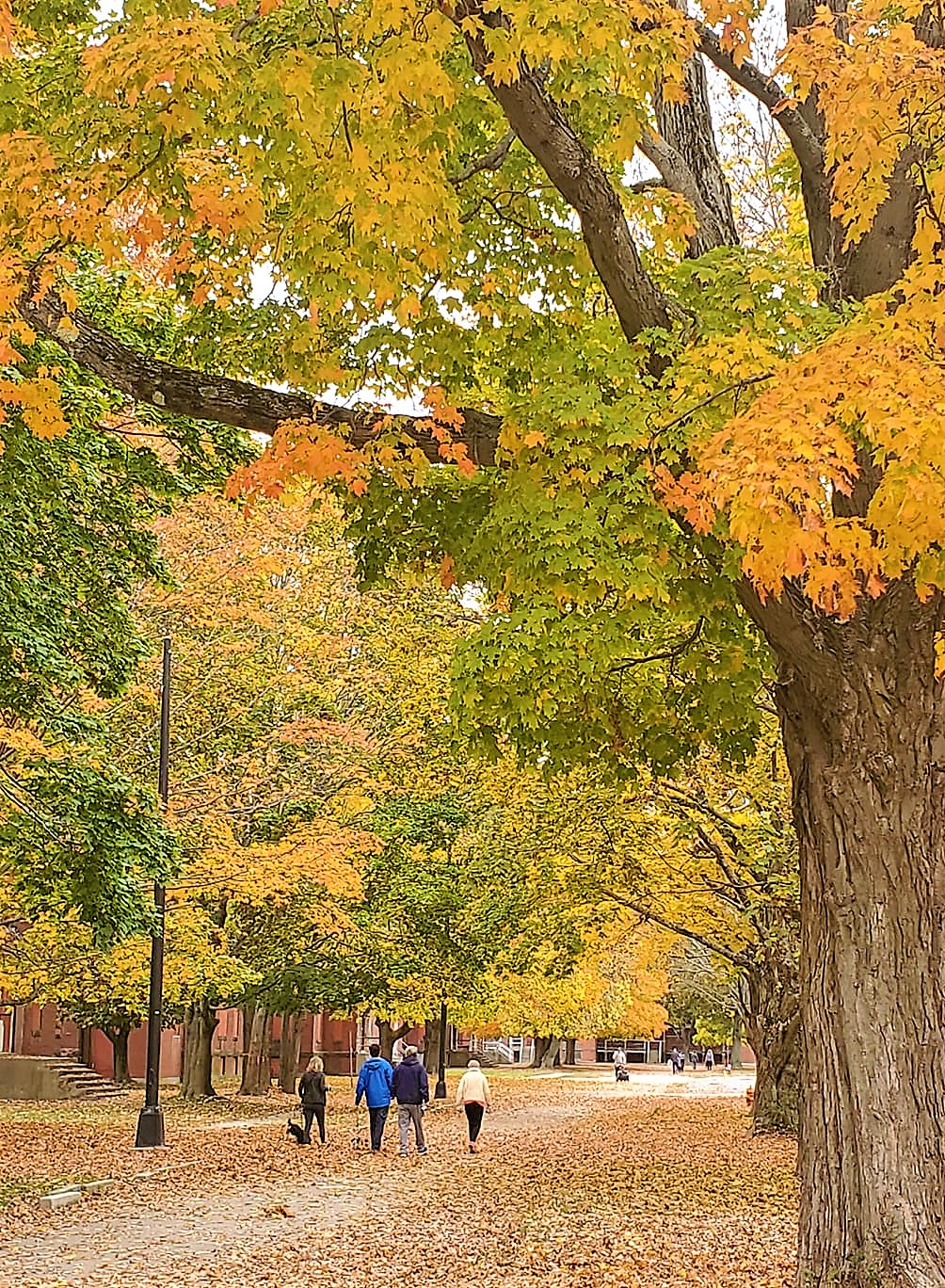
Photo note: In her book, The Maple Trees Bear Witness, author Laura Wirth noted that the maple trees at Medfield State Hospital through all seasons “witnessed trauma at Medfield State Hospital for over a hundred years.” They have also helped to tie the past to the present regarding her own experiences with the site.
John Thompson, who served for more than a decade as caretaker for the Medfield State Hospital property after the town purchased it from the state, has become an expert on MSH history, and the history of mental illness in the United States.
In a paper published about MSH, John shared, “By the mid-1970s most of the patients were moved from the hospital to community-based halfway houses. As a result, the hospital population continued to drop until it was under 200 patients by the time it closed in 2003.”
However, Laura pointed out in her book that the community-based option wasn’t available to her mother due to her unique needs.
“There’s no doubt it was difficult for someone to have a family member at Medfield State Hospital in the three decades before it closed. It was challenging navigating family visits and determining each patient’s program of care. The operation overall and its workers were also drowning in policies,” said John. He also pointed out that budgeting was getting harder every year – it was costly to keep the hospital going, and it was becoming more expensive for patients.
Regarding the Clark building where Laura’s mother stayed, John described the environment just as Laura experienced it in her book.
“The building had a locked ward that required constant supervision because staff were afraid patients would hurt others or themselves. The building was essentially a full-service psychiatric hospital. It was a scary place, with dual diagnoses complicating treatment and release plans. There was also a lot of experimentation with pharma to see which medications would work,” said John.
He recounted these key points in recent MSH history:
• In 1999, the town shared its concerns with the state over the continued deterioration of the hospital buildings. Working with the Medfield State Hospital Preservation Committee and state representatives, the state appropriated $500,000 to mothball the hospital buildings with the hope of stopping their further decay.
• In 2002, the state notified the town it would be closing the hospital the following year.
• The Clark building, built in 1958, was named after the first surgeon to be hired at Medfield State Hospital, George Clark, M.D. It was a building that was considered not in keeping with the historical character of the campus, so the town convinced the state to demolish it with the Odyssey House in 2012.
As Laura and John both attest, it’s stories like the ones captured in Laura’s book that are important to document. And as the inscription on the memorial stone at the Medfield State Hospital cemetery reminds visitors, “Remember us, for we too have lived, loved and laughed.”
“We must not forget the people, the patients and their loved ones who suffered at Medfield State Hospital,” Laura noted in her letter to the Society that accompanied her book. Today it’s that very book that now serves as a lasting tribute to a mother who endured so much, but still allowed her daughter to thrive.
(Learn more about The Maple Trees Bear Witness and author Laura Wirth at www.laurawirth.com.)