Sep 1, 2025
Jazz music, flapper dresses and speakeasies marked “The Roaring Twenties,” and Medfield was no different than other small towns across the nation experiencing a variety of changes and challenges. While economic prosperity was enjoyed by many, social tensions around racial, religious and cultural differences became more prevalent. Prohibition and immigration also created unique circumstances, while workplace safety regulations were virtually non-existent resulting in high employee fatality rates.
During 1925, a variety of Medfield news stories appeared in The Boston Globe providing insights into what was happening in our town over the 12-month period. Related articles by Town Historian Richard DeSorgher help to provide additional details today.
 Ku Klux Klan appears but residents resist
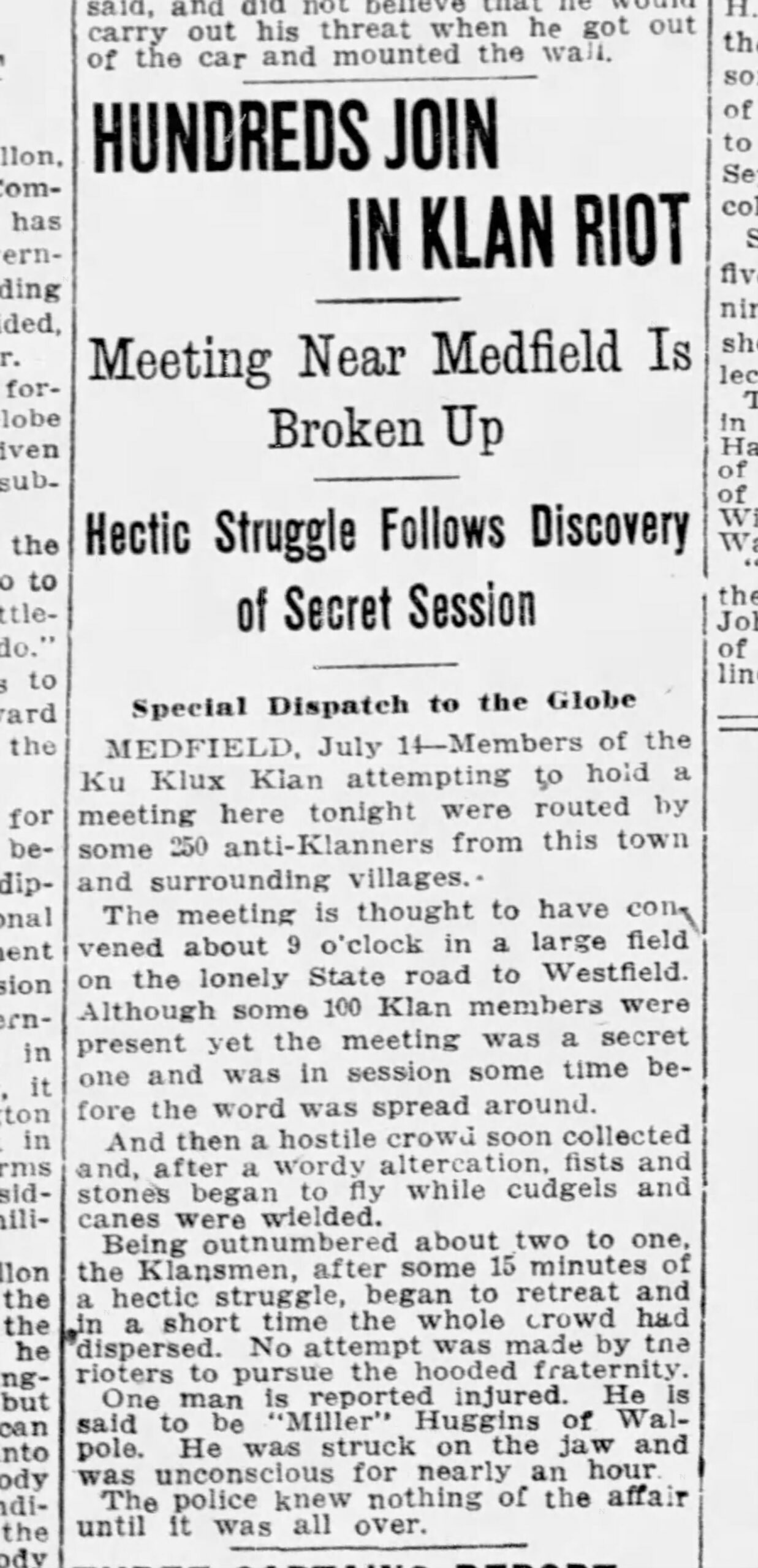
With the headline, “Hundreds Join in Klan Riot – Meeting Near Medfield is Broken Up,” the Globe article tells the story of members of the Ku Klux Klan attempting to hold a secret meeting in the town on the night of July 14, but the group was broken up by an estimated 250 “anti-Klanners” from Medfield and “surrounding villages.”
This 2011 Patch article by Town Historian Richard DeSorgher provides additional information about related KKK events that affected a local family.
Truck-rail coach collision kills 3, injures 8
On Aug. 24, three road construction workers were killed and eight were injured when their truck collided with a gasoline-powered rail coach at the Dale Street crossing between Medfield and Medfield Junction. The coach was owned by the New York, New Haven & Hartford Railroad (N.Y., N.H. & H).
The men intended to travel from Medfield to Milford after working on road construction. At the time of the crash, a fire alarm sounded from a nearby box, and firemen arrived to assist and clear up the wreckage. Doctors and nurses from Medfield State Hospital were called to administer first aid and facilitate transfers to area hospitals.
This was the second N.Y., N.H. & H rail-related accident in Medfield within less than two years. On October 22, 1923, a freight train derailed at Medfield Junction. The accident was caused by the failure of an engineman to properly observe and obey signal indication, resulting in the death of two employees and the injury of four employees.
 Medfield proprietor loses case against patrolman
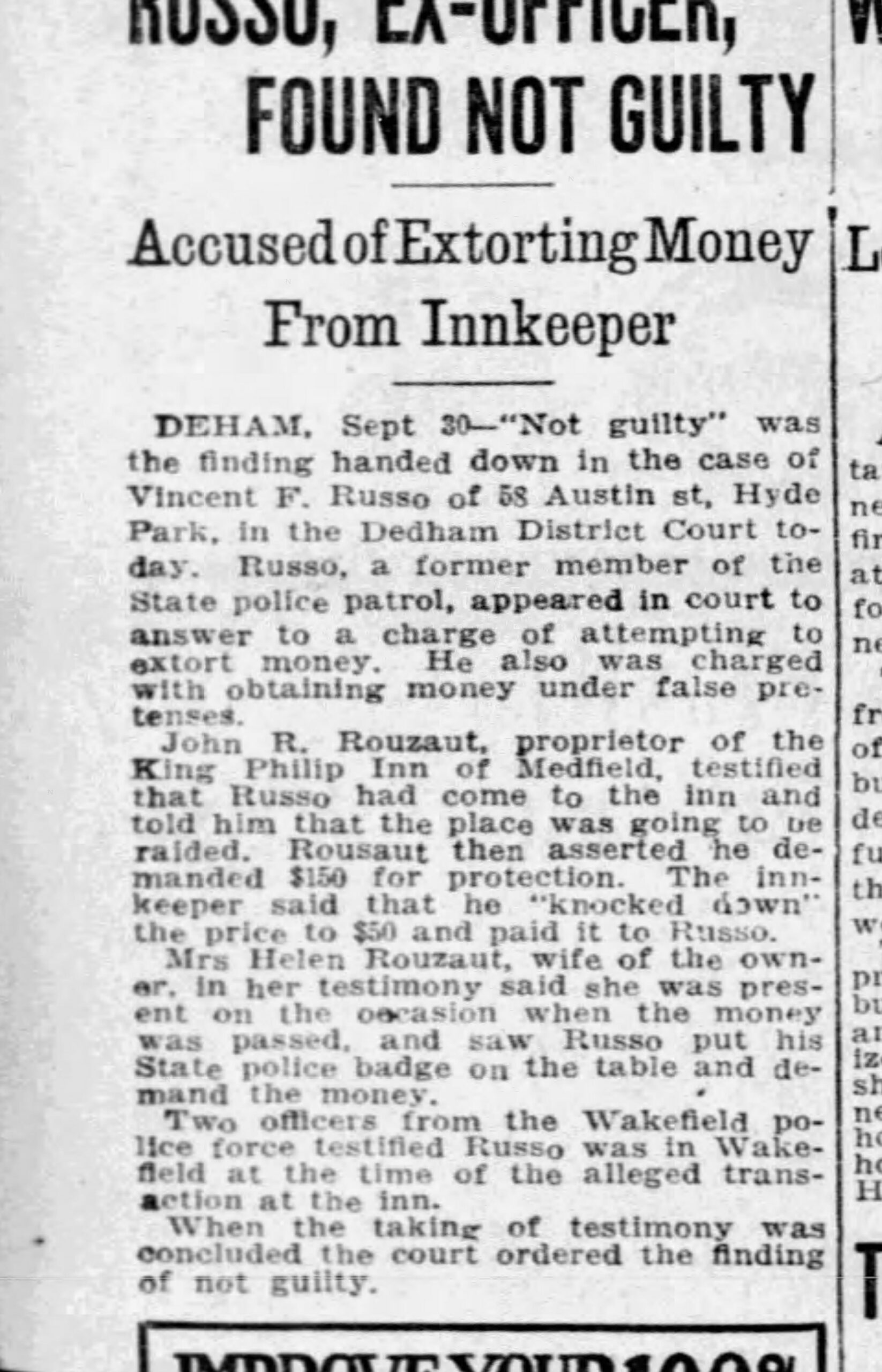
On Sept. 30, former State Police Patrolman Vincent Russo was found not guilty of extortion and obtaining money under false pretenses. Medfield King Philip Inn proprietor John Rouzan had accused Russo of the actions.
Rouzan alleged that Russo had told him his inn would be raided, but while putting his badge on the table, Russo demanded a payment of $150 for protection services. The innkeeper then said that he “knocked down” the price to $50 and paid it to Russo.
Two Wakefield police officers testified Russo was in Wakefield at the time of the alleged transaction. Russo was then found not guilty.
Brick company touts 100 years of sand supply
American Brick Company, was one of the largest manufacturers of sand-lime brick in the U.S. Its sandpits, located in Medfield, were estimated to provide 100 years of sand supply at the current rate of production. As of Oct. 9, American Brick stock reached a new high, and the company experienced record earnings.
According to DeSorgher in this 2012 Patch article, American Brick Company was located in the West Street area. In the 1920s, it employed 40 workers producing thousands of bricks. “It was at this time that Italian laborers employed at the brickyard, and who were receiving 50 cents per hour, went on strike. Police officer Cornelius McKeown was called to quell the disturbance that resulted. Into the 1930s, its name changed again, this time to the Atlantic Brick Company which stayed in business into the 1960s,” DeSorgher writes.
American Brick was among a small number of brick companies that survived The Great Depression.
As Medfield prepares for its 375th anniversary, and the nation plans for the 250th anniversary of American Independence – both in 2026, this article provides a brief 100-year steppingstone on the path through the centuries.
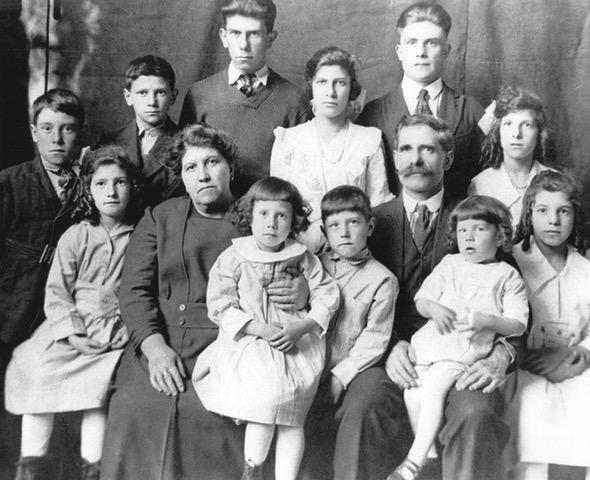 The Palumbo family was one of many Italian families that lived on Frairy Street, but faced anti-Italian (and general anti-immigrant) sentiment during the 1920s. As noted in this article, the Ku Klux Klan targeted Medfield families like these in 1925.
The Palumbo Family of Medfield