Oct 1, 2026
Long before there was a town called Medfield, Indigenous peoples lived on and used the land along the Charles River. The river, its tributaries, woods and meadows were part of a landscape with a history far older than the English settlement. Medfield’s 375th anniversary commemorates the founding of a colonial town, while also offering a chance to remember the people whose homeland it became.
To English colonists, the area was known as Boggestow and lay within Dedham’s extensive territory. By 1640, Dedham farmers were cutting grass in the meadows to feed their livestock. Within a decade, some families were preparing to move here permanently. In November 1649, Dedham approved plans for a new settlement, and on June 19, 1650, a committee laid out its first thirteen house lots. The settlers agreed to pay Dedham £50 for the land. In 1651, Medfield gained recognition as the 43rd town in the Massachusetts Bay Colony.
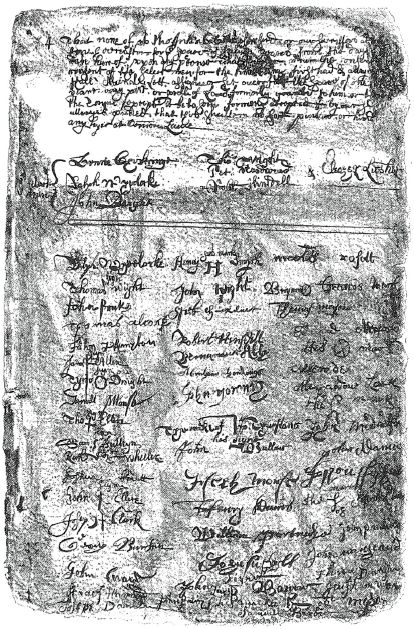
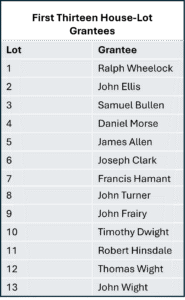 Who were the first thirteen?
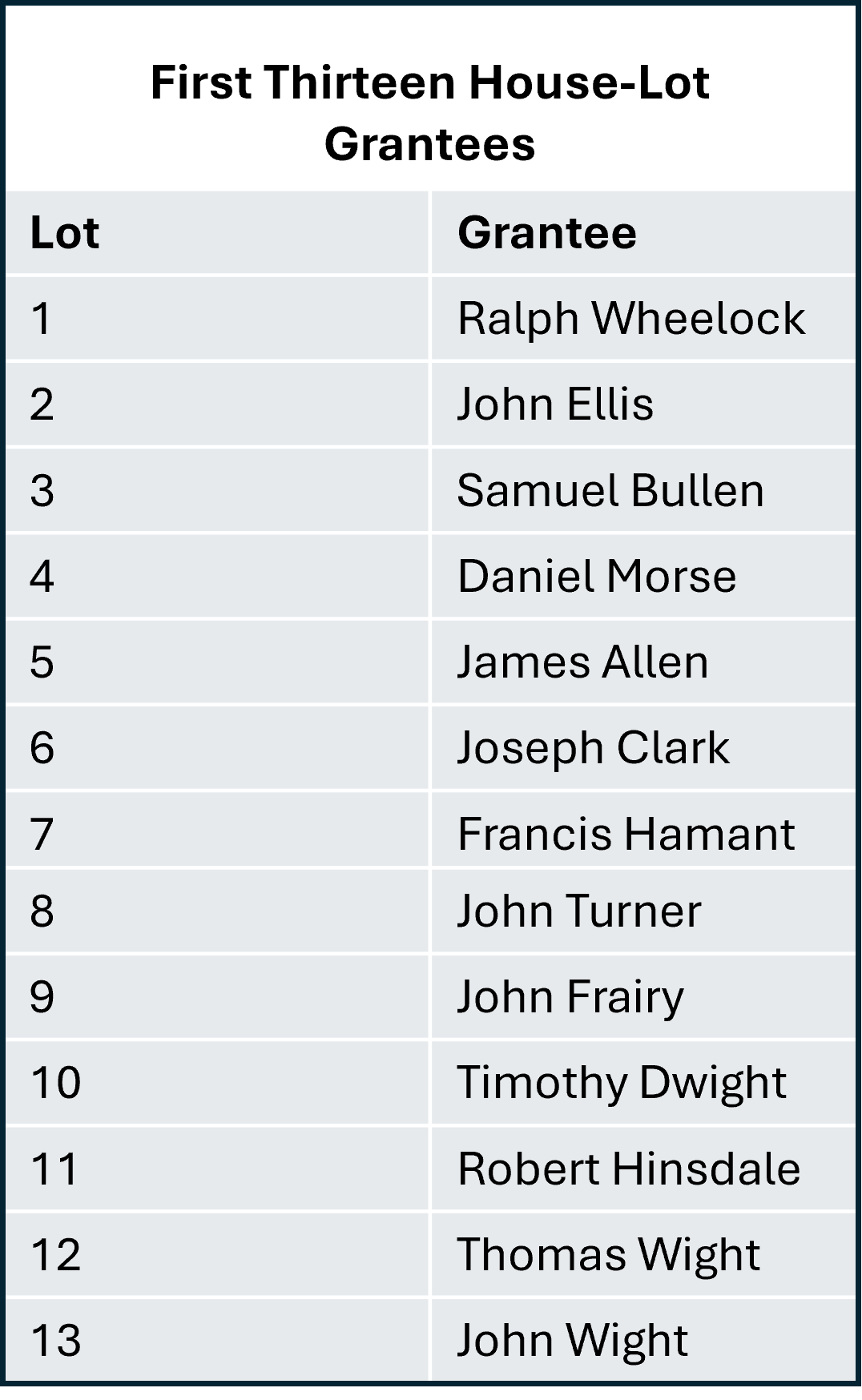
The original house-lot grants name Ralph Wheelock, John Ellis, Samuel Bullen, Daniel Morse, James Allen, Joseph Clark, Francis Hamant, John Turner, John Frairy, Timothy Dwight, Robert Hinsdale, Thomas Wight and John Wight. These are the thirteen people traditionally identified as Medfield’s first settlers. More precisely, they were the first thirteen house-lot grantees recorded in 1650. Their names alone do not tell us everyone who belonged to their households or helped establish the settlement.
The first thirteen were soon joined by more settlers. During the spring and summer of 1651, house lots were granted along South, North, Bridge and Main Streets to at least twenty-three additional people. Unlike the first thirteen recorded grantees, all of whom were men, the twenty-three additional people granted house lots in 1651 included Margaret Sheppard. Her Bridge Street lot was recorded in her own name.
The grants also offer a glimpse of the town they were building. Ralph Wheelock’s lot lay at what is now the corner of Main and North Streets. John Frairy’s extended along the street that still bears his name. Timothy Dwight’s house stood on the site associated with today’s Dwight-Derby House. The main road followed much of the course of present-day Main and Bridge Streets, and a crossing road helped establish the four corners that would remain Medfield’s center.
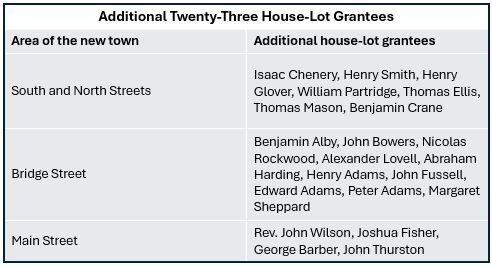
Receiving a lot brought responsibilities. The settlement’s rules called for grantees to establish themselves in Medfield by the end of May 1651 unless they were granted more time. Land was apportioned according to household size and taxable estate, with provision for both a house lot and meadow. The planning committee also reserved land for shared needs, including a source of clay. These details show how deliberately the settlers organized the practical work of starting a town.
A community needed more than houses and fields. Medfield’s first selectmen were Ralph Wheelock, Timothy Dwight, Robert Hinsdale, John Frairy and Benjamin Alby. A burying ground had been set out by 1651, and that year the town made an agreement with carpenter George Barber to build a mill. Education followed soon afterward: in 1655, residents voted £15 to establish a school, with Wheelock serving as its first schoolmaster.
The names on that first list remain a tangible link to 1651. So do the streets, the town center and the Dwight-Derby House site. Yet the founding record is only one chapter in Medfield’s history. As we celebrate 375 years since incorporation, we can look closely at how the colonial town began while recognizing the much longer Indigenous history of the land on which it was built.
Sources: William S. Tilden, History of the Town of Medfield, Massachusetts, 1650–1886; Medfield Historical Society, “Medfield’s Town History.”