July 21, 2026
Ever since King Philip’s War reached Medfield in 1676, leaving numerous homesteads in flames, the town has repeatedly had to recover from devastating fires.
Town Historian Richard DeSorgher chronicled some of Medfield’s most significant fires in a 2011 Hometown Weekly article (see Richard DeSorgher-Medfield fires 2011). Among them were the burning of the Town House in 1874 and again in 1923, fires at Noon Hill in 1896 and Rocky Woods in 1932, and perhaps the worst of all—a 2,500-acre blaze that swept through the town’s northeast section in 1921.
In more recent times, the Medfield Historical Society collection documents two of the town’s most historic homes that were nearly destroyed by fire: the circa 1749 “Quinobequin” house at 49 Bridge St., and the circa 1730 Lucy Bran House at 661 Main St. In the late 1800s, town residents gave the Bridge Street home the Native American name “Quinobequin,” which means “winding” or “meandering” as it refers to the nearby Charles River.
Property part of first settlement
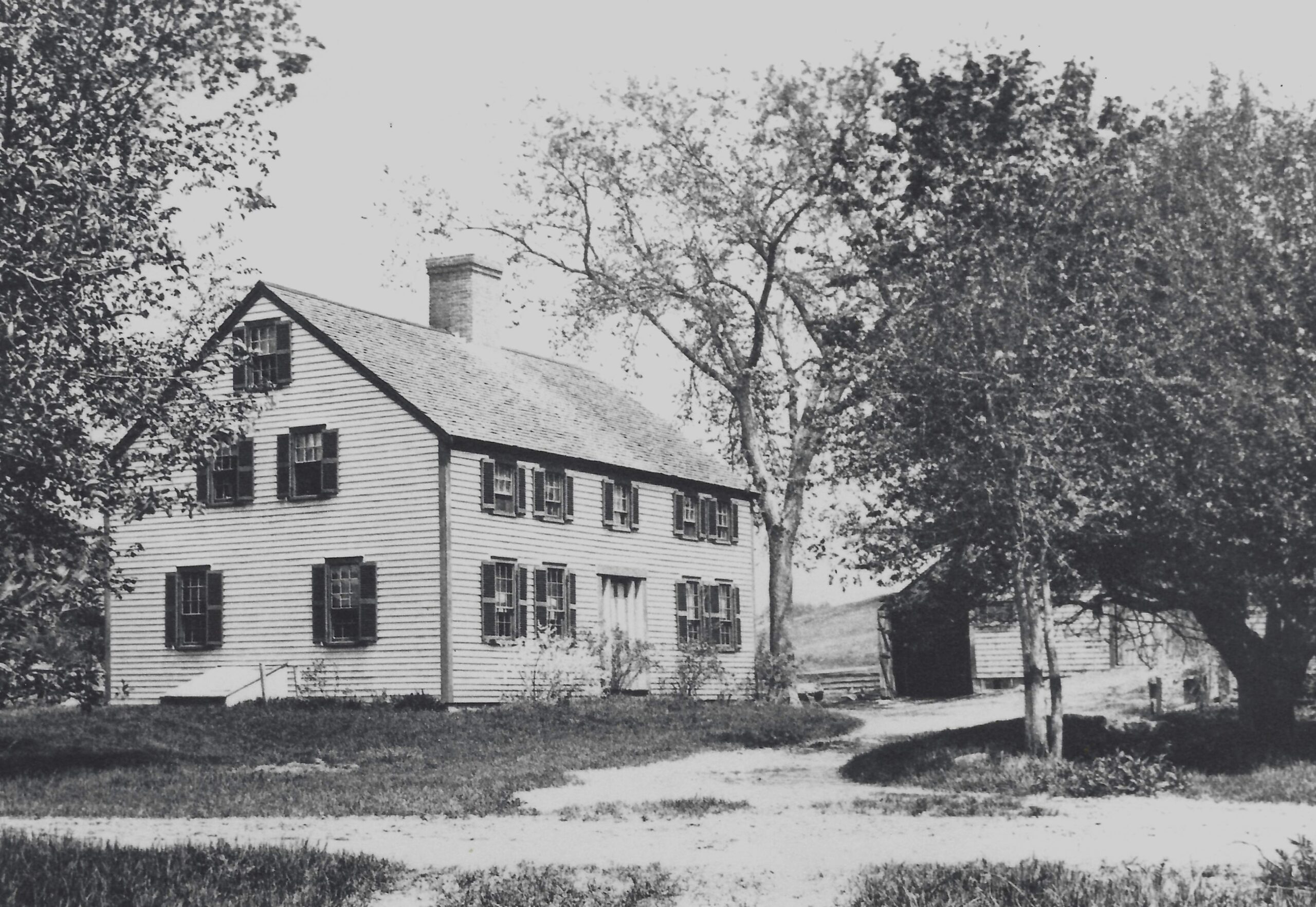
Still residing at 49 Bridge St. after purchasing the property in 1991 is the McCrossan family. Kathy and Steve McCrossan and their three children were impacted by a devastating three-alarm fire that gutted their home in April 1997. Steve was at work, two of their children were in school, and Kathy was home with their youngest son.
In the years leading up to the fire, the McCrossans had spent thousands of dollars and countless hours renovating the antique home, doing much of the design and construction themselves. Their work included creating custom moldings, installing new white clapboards, restoring the façade, and cleaning all 36 original windows just before the fire.
Although one structural engineer recommended demolishing what remained because of insurance limitations, the McCrossans refused—they were determined to save the house. Fortunately, another engineer from Medfield volunteered his services, bringing both technical expertise and a determination to help restore what remained of the home, Kathy recalled in news reports at the time.
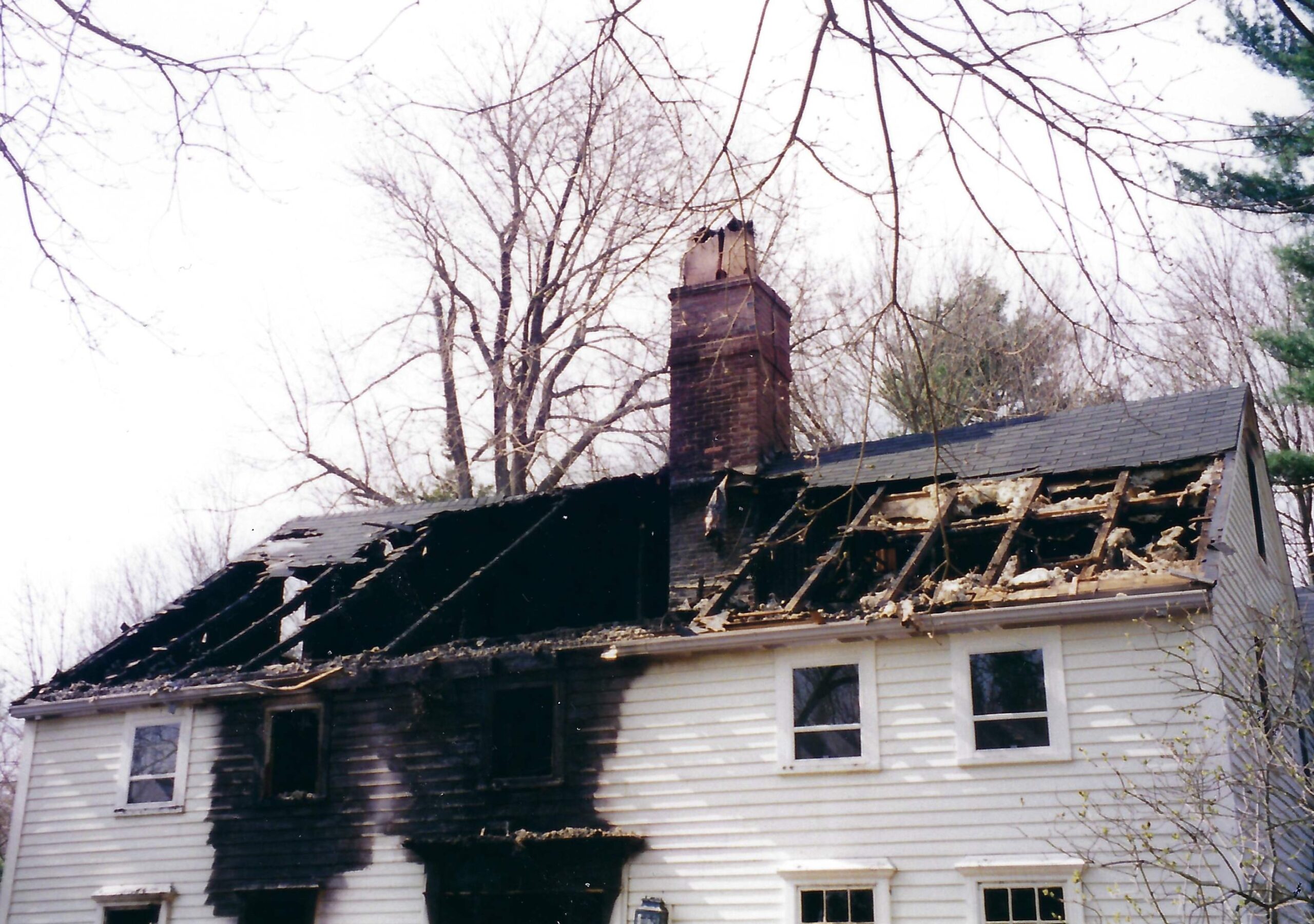
“We salvaged floorboards, dismantled and reassembled fireplaces, restored staircases, and basically saved anything that didn’t suffer from heat, fire or water damage,” Kathy explained during a recent interview. “And inside, we also took the opportunity to bring the house up to code to achieve energy efficiency and safety improvements, including hard-wired smoke detectors and chimney lining installations.”
According to Society documents, the property is considered one of Medfield’s oldest homesteads, located within the area first settled around 1650. The original Harding family house burned during King Philip’s War, and another fire in 1749 heavily damaged the house. Kathy believes the center chimney and many of the post-and-beam supports date to the original 17th-century structure. She noted that the chimney still bears evidence of the three rooflines from successive rebuilds, with the bricks exposed in the attic stairwell, “revealing the flashing of each roofline as both a reminder and badge of honor.”
“When we moved in, we learned that, as part of the rebuilding after King Philip’s War, a hiding place had been built beneath the front stairs near the chimney, complete with a false wall,” Kathy said. “The space is still used by us, but just for storage.”
A celebrated roadside cottage saved
In 2002, after living in the historic Lucy Bran House at 661 Main St. for about 10 years, the Phipps family experienced a devastating kitchen fire.
While the fire caused considerable damage to the circa 1730 house, Brad Phipps explained that the oldest section survived, while the newer rear portion sustained most of the damage.
“It had the thickest chestnut beams, so it took longer to burn,” he noted.
Working with architect David Scharff, Brad and his wife, Betsy, carefully restored the house while preserving its historic character, despite the considerable cost.
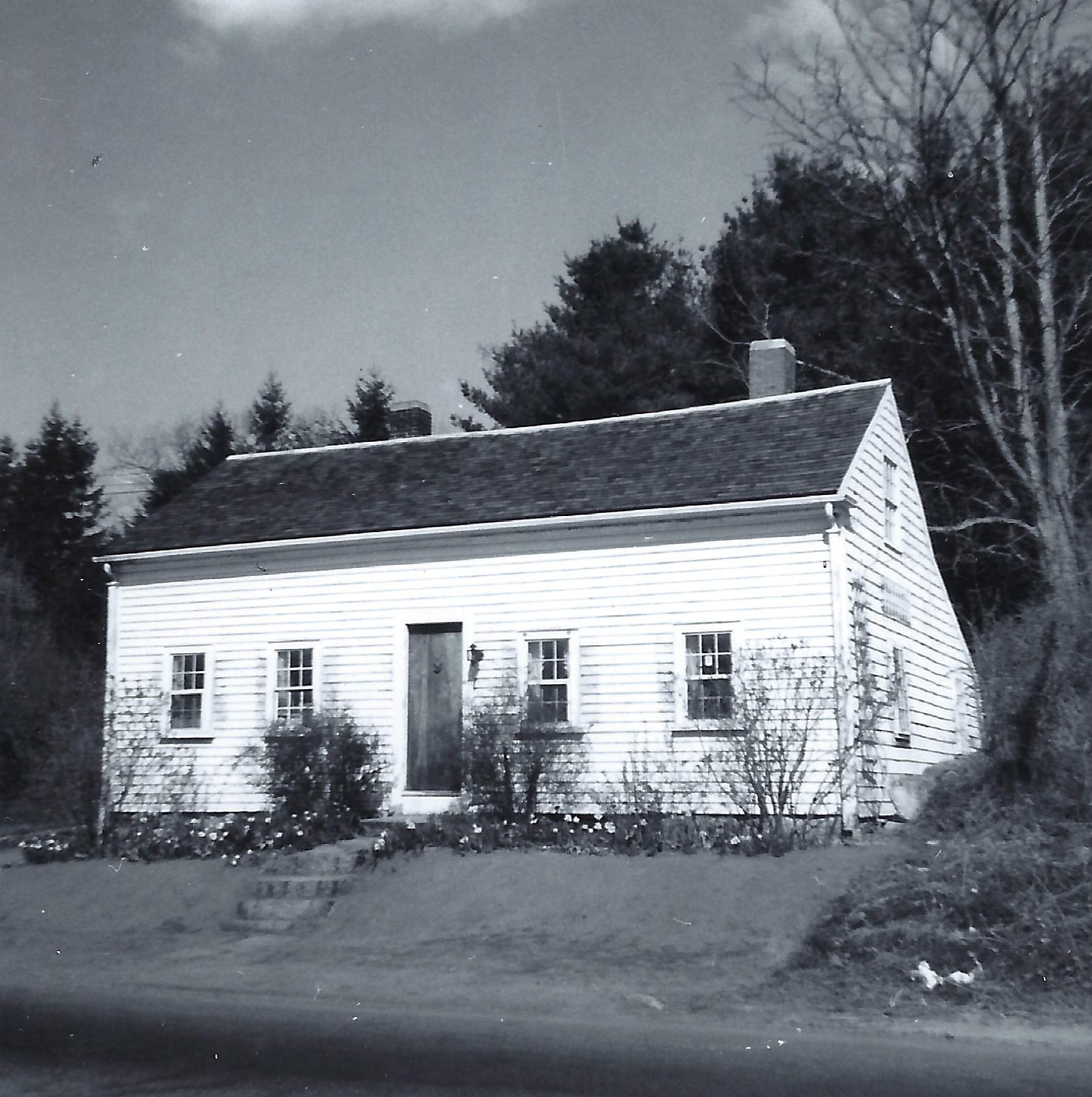
“David and I served on the Historic District Commission together, so he was the perfect choice to both restore and aesthetically preserve the appearance, while somewhat enlarging the house to allow a growing family to stay there,” said Brad. “We were out for 10 months, and it was a trauma, but it was our obligation to save her, and bring back a town treasure. The house was a part of us and we were devastated to see her so low.”
The Phipps family lived in the Lucy Bran House for 32 years before selling it two years ago to a couple who now share their commitment to being good stewards of the historic landmark.
The history of the Lucy Bran House has been well documented by both the Society and the Massachusetts Historical Commission (MHC), and is also noted as one of Medfield’s “witness houses” during the Revolutionary War (see related article).
The house stands on land once owned by Eleazar Ellis, who is believed to have built the original structure. It remained in the Ellis family for five generations.
As noted in MHC records, “This house was steeped in local legend as pre-dating the incorporation of the town (1650) and began as a herd house for people from Dedham who led their animals to the Charles River meadows for fodder.”
MHC records also suggest that the eastern portion dates from roughly the 1620–1725 period, while the western portion appears to have been added in the mid-18th century.
Lucy Bran is said to have lived in the house from 1758 until her death in 1837 at the age of 85. Based on documents in the Society collection, she is believed to have been the last Native American resident of Medfield.
The house was later occupied by Samuel Green, his wife, and their two children, descendants of enslaved people, before passing through numerous owners over the years.
The house appears in Dennis Miller Bunker’s 1889 painting Roadside Cottage, now in the National Gallery of Art in Washington, D.C., after previously being exhibited at Boston’s Museum of Fine Arts. Lucy Bran’s Bible is also preserved in the Society’s collection.
Appreciation for a caring community
As unusual as it may seem, both Kathy McCrossan and Brad Phipps found lasting positives amid the devastation their families experienced.
“A lot of feel-good memories came out of a very hard time,” Brad said. “The town—the people, many of them anonymous—were wonderful. They left food and even money.”
All these years later, Kathy still expresses deep gratitude for the overwhelming support her family received through the Bridge Street ordeal that lasted more than two years.
“The experience was life-changing in so many ways. The community of Medfield gathered around us with overwhelming generosity and support. How do you thank people for this kindness, especially when many gifts were anonymous? I carry this feeling of humility forward, ever grateful for our Medfield community,” said Kathy. “And as a family, we always refer to our lives as ‘before the fire’ and ‘after the fire.’ Because of what we went through, I never had to teach my kids life lessons about how to help others—they learned it firsthand.”
The McCrossan and Phipps families could have taken the easier route—demolishing, rebuilding, and moving on after their house fires.
Instead, they invested enormous time, money, and emotional energy to preserve historic treasures that belong to the entire community. It’s no wonder that same community supported them in return.
In addition to Society records, other sources for this article include:
Medfield Press
Middlesex News
Mass Historical Commission MACRIS database
“Worst Medfield Fires” by Town Historian Richard DeSorgher