Jun 1, 2026
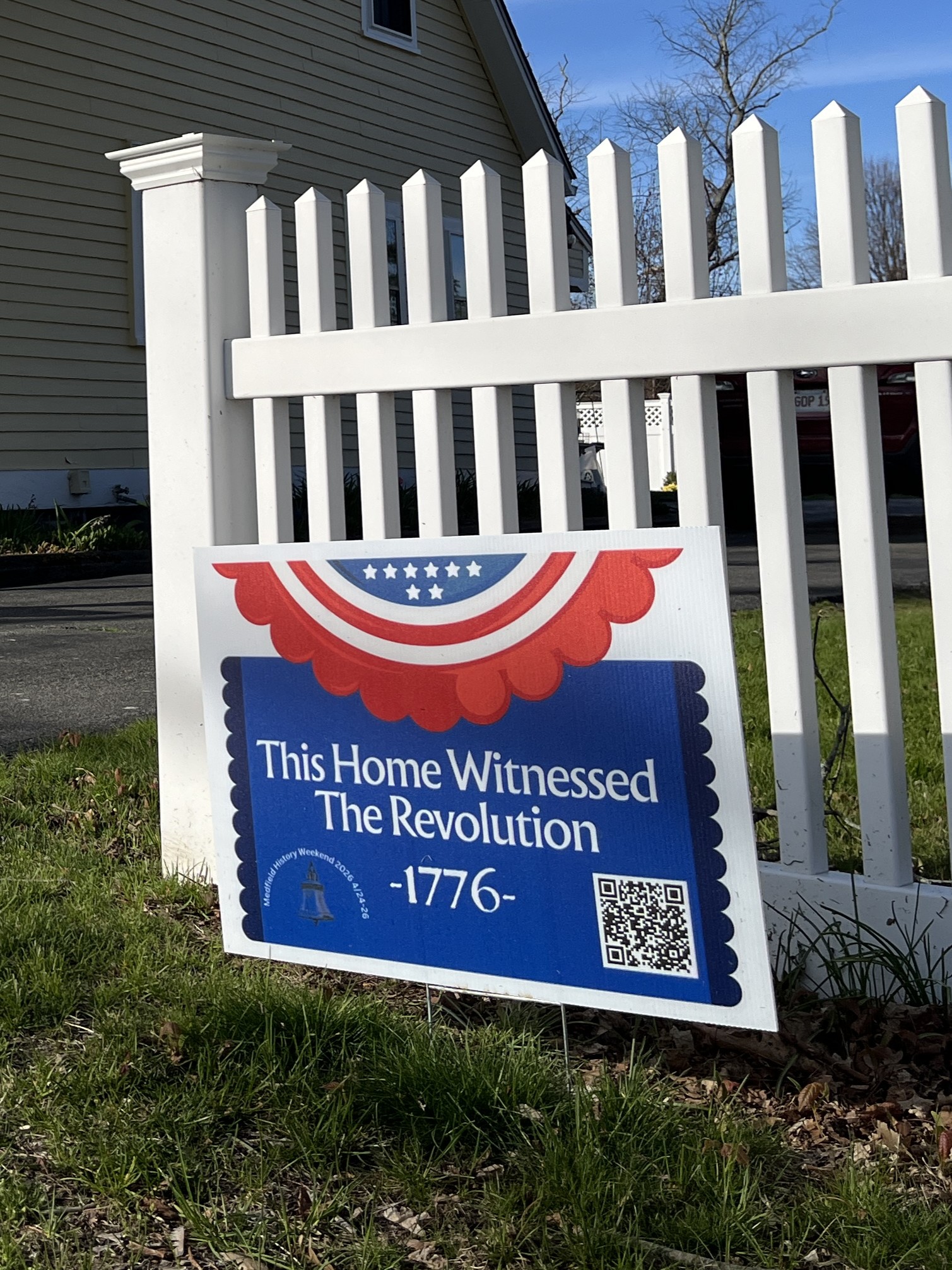 Medfield is fortunate to have more than forty homes still standing that witnessed the Revolutionary War 250 years ago. Preserved through the care of generations of homeowners and a community that values its history, these “Witness Houses” offer a tangible connection to Medfield’s colonial past. Built when Medfield was a small agricultural village, many began as simple wood-frame homes with center chimneys and were expanded over time as families and fortunes grew.
In honor of America’s 250th anniversary, we are highlighting these historic homes throughout the year. During Medfield History Weekend, the Old Town Trolley tour passed many of the houses, with narrator Joe Opiela sharing stories and historical insights along the route. The Medfield Historical Society has also contacted homeowners about placing signs in front of the houses to identify them and recognize their stewardship. Additional Witness Houses will continue to be featured in future issues of the Portal.
The Gershon Adams House is located on Bridge Street. The main body of this house is a classic center-entry Federal-style home with later Greek Revival features. Like so many houses in New England, it began as a small dwelling built about 1732 and was added onto over the decades. It is believed that Jonathan Adams Jr. (1671–1744) constructed the earliest portion of the house, now attached to the main house and an 1870s barn. This little house, greatly altered around 1904, originally had a large center chimney and likely consisted of two rooms downstairs and two rooms upstairs—a simple farmhouse.
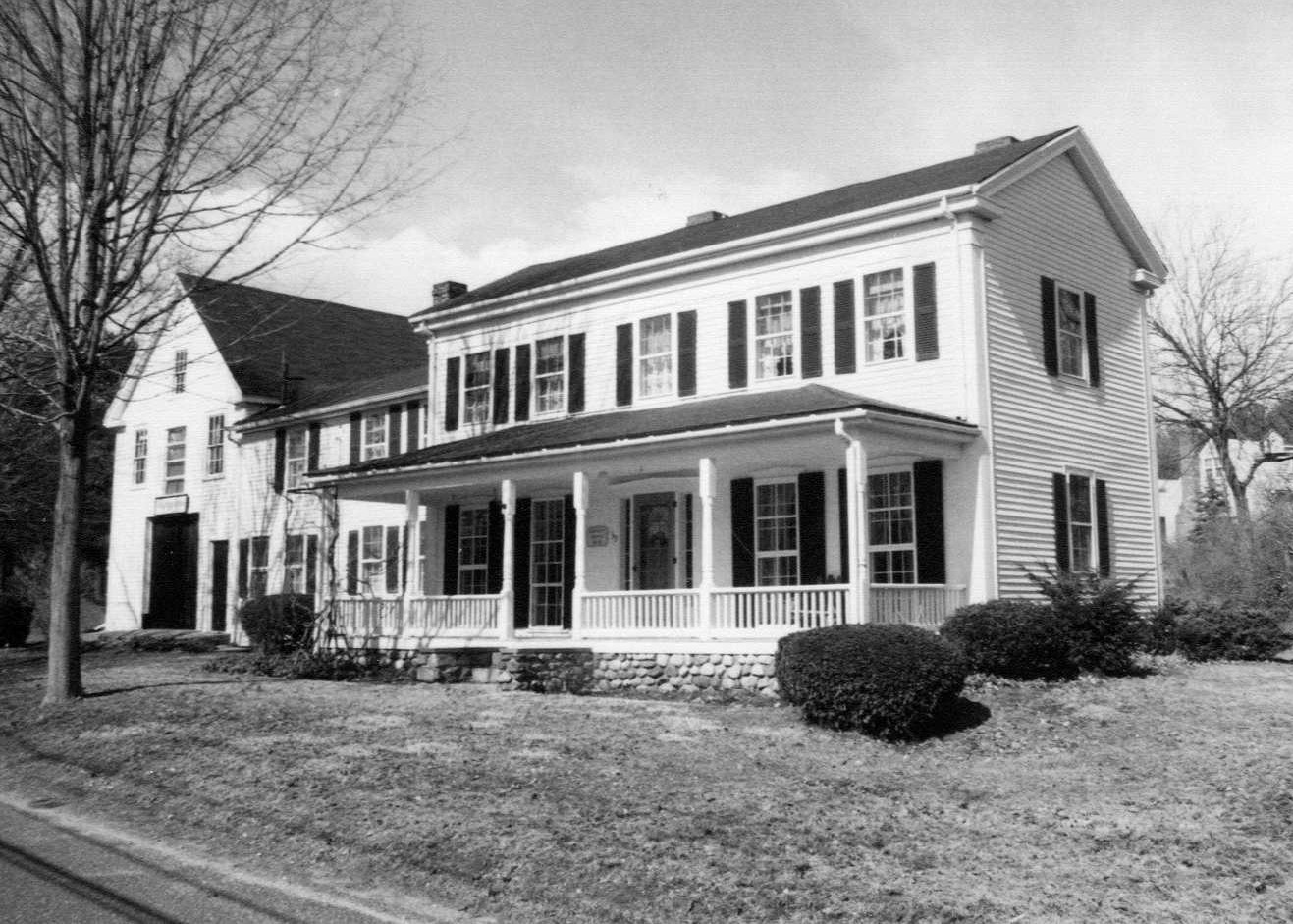
Around 1778, Gershon Adams (1745–1834), Jonathan’s grandson, built the large Federal-style addition. It is a classic center-entry colonial with five symmetrical windows across the façade. In the 1850s, Gershon Adams Jr. (1793–1871) added the front porch and wide channeled corner boards that mimic Greek columns topped by decorative cornices, as well as pediments above the first-floor windows and a new front door with sidelight windows. Around 1870, a barn was added to the side of the old house, now serving as a garage. In 1904, the house underwent major updates. The old house addition had its large fireplace removed, larger windows were installed, and a larger porch was built, likely replacing the Greek-style columns that had once supported the earlier porch.
The Adams family was among the earliest settlers of Medfield. Jonathan Sr. (1615–1690) and his brothers Edward, Henry, and Peter came to Medfield as early as 1652, with Jonathan settling on Bridge Street. His son, Jonathan Jr., built the oldest part of the house. The property then passed to Ezekiel (1705–1777), followed by Gershon Sr. (1745–1834), a highly skilled carpenter said to have worked on the Endicott Mansion. His son Gershon Jr. (1793–1870), a farmer, was the next owner, followed by his son Charles (1822–1903). The property remained in the Adams family until 1899, when Charles Adams sold it to his second cousin, Joseph E. Allen (1862–1949). Although the Adams family farmed the land for generations, it was Allen who turned it into a business operation. He first established a dairy farm, naming the property Riverview Farm. In 1922, he planted apple orchards and renamed it Apple Ridge Farm.
Today, the Gershon Adams House remains a private residence, though the many acres that once surrounded the farm were sold off long ago. Modern suburban homes now stand where apple trees once blossomed. Thankfully, the Gershon Adams House still stands proudly on Bridge Street—a lasting reminder of Medfield’s early families, evolving architecture, and deep agricultural roots.