July 15, 2024
A few months ago, Norma Vogel wrote an article entitled “Letter from Boston,” about Medfield’s Committee of Correspondence and its interactions with the Boston Committee. She noted that Moses Bullen (1731–1802) of Medfield was chosen to represent the town in the General Court in Salem (Tilden, p. 162).
As a direct descendant of two of Medfield’s 13 original founders—and an enthusiastic amateur genealogist—I frequently consult William S. Tilden’s History of the Town of Medfield, Massachusetts 1650–1886 to explore the ancestry of Medfield’s leaders and the many fascinating family connections one finds in a small new England community. Tilden’s masterwork conveniently combines early town history with 122 detailed family genealogies—from Adams to Woods—all in one volume.
A Surprising Connection?
My curiosity about Moses Bullen’s roots led me to Samuel Bullen, listed on page 334. What immediately caught my eye was the first line:
“Samuel Bullen (or Boleyn, according to the English spelling).”
I did a double take. Could Samuel have been a relative—or perhaps a descendant—of Thomas Boleyn, 1st Earl of Wiltshire, 1st Earl of Ormand, 1st Viscount Rochford KG, and, most importantly, father of Anne Boleyn, the ill-fated second wife of Henry VIII? Could Medfield have a link to the infamous Tudor court?
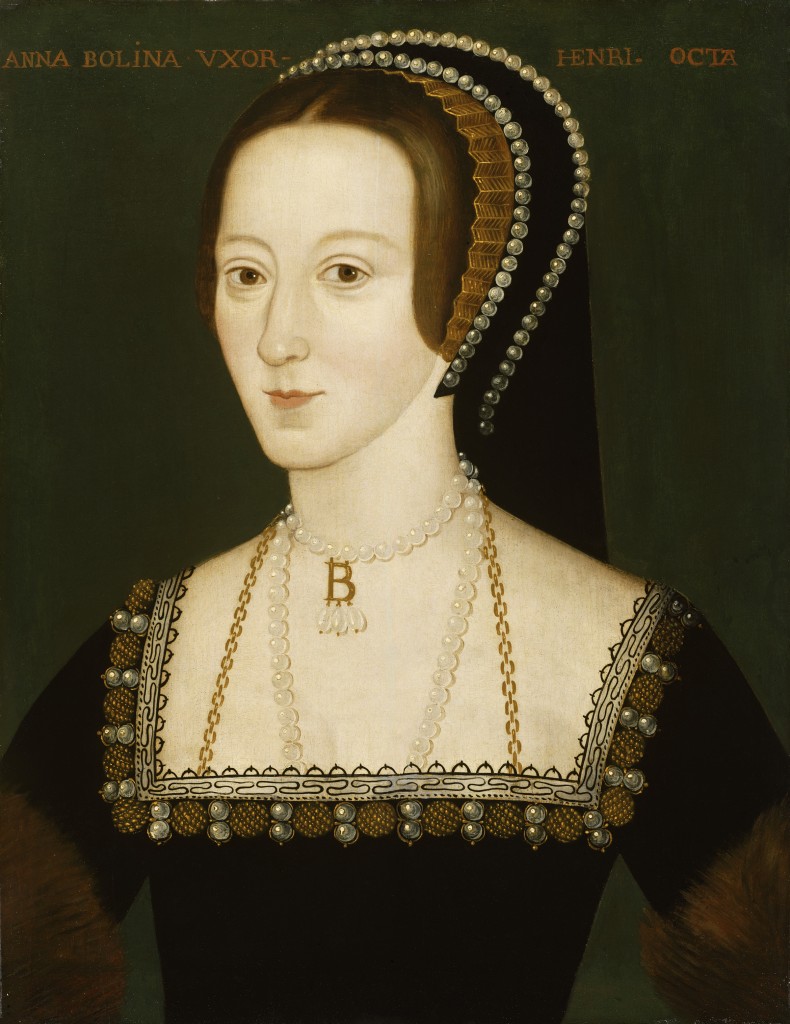
Anne Boleyn
Unknown English artist | Late 16th century, based on a work of c. 1533-1536 Oil on panel | (21 3/8 in. x 16 3/8 in. ) NPG 668
Sadly, the answer is no.
I traced the Bullen/Boleyn line on FamilySearch all the way to Anne’s father, Thomas Boleyn (1477–1539). But deeper, more credible genealogical research confirms that any connection is impossible. Thomas Boleyn had only one son, George, who died without legitimate or, for that matter even illegitimate children, of record. You may recall George was accused—falsely—of incest with his sister Anne and executed minutes after her at the Tower of London.
So why the two versions of the name?
The simple answer, confirmed by both historians and AI, is this: the original surname was Bullen. Anne’s time at the French court likely influenced the later, more sophisticated spelling: Boleyn. Spelling in the 16th century wasn’t standardized, and Bullen, Bulleyn, and Boleyn were all used interchangeably. But no matter the spelling, they were all pronounced the same.
Tilden’s Take on the Bullen Family
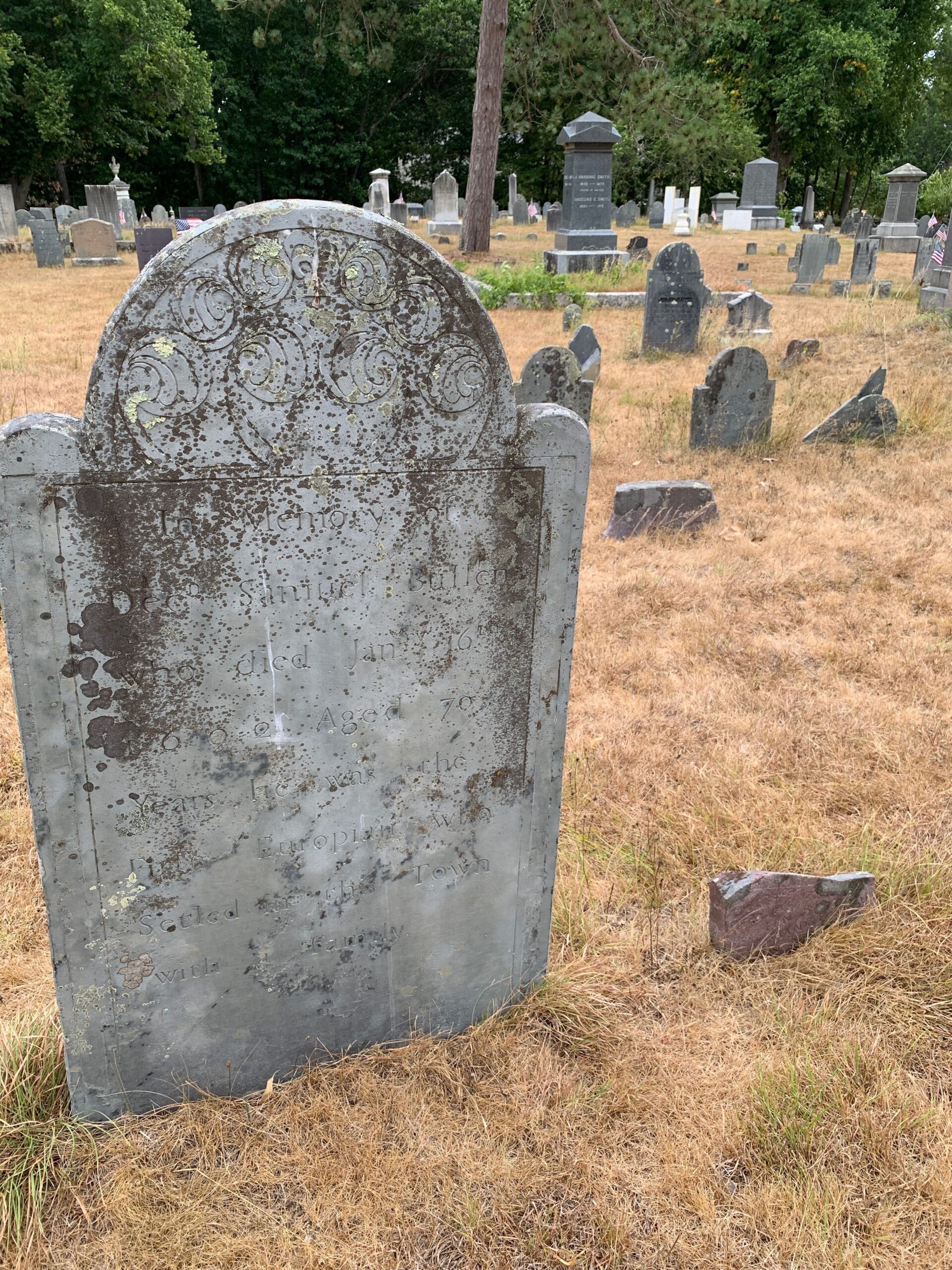
Tilden’s genealogical section offers a detailed and fascinating glimpse into the real story of the Bullen family:
“The Bullens were among the earliest families in town, and took an active part in its affairs for many years… They were substantial farmers, and men of intelligence and character.”
Samuel Bullen first appears in Watertown in 1636. He signed the Dedham Compact, took the freeman’s oath in 1641, and owned a house there by 1646. A tombstone later erected by his descendants declares him “the first European with a family in this town.”
His first home in Medfield—built before November 1651—stood near today’s Philip Street, opposite the F. D. Hamant house. That home was burned during King Philip’s War, forcing Samuel to temporarily relocate to Sherborn where he became a tenant of his brother-in-law, Daniel Morse. In 1679, describing himself as “late of Medfield,” Bullen petitioned for tax relief, citing wartime losses and the burden of supporting his “necessitous children.”
He returned to Medfield shortly thereafter, rebuilt, and resumed civic life. Samuel served as a selectman in 1682 and was named a deacon before 1689. Remarkably, his house was still standing in 1798. In addition to his homestead, Bullen held land east of Mount Nebo in what was then called “Goudy.”
He married Mary Morse in 1641, and both passed away in 1691.
Legacy Over Royalty
So, while there’s no Tudor bloodline here in Medfield, the Bullens left behind something just as significant: a legacy of resilience, leadership, and community. Their impact is woven into the foundations of our town.